Coffee From Ethiopia: Regions, Flavors and How to Choose Your Beans
Your Ethiopian beans arrived stale because they were roasted months ago. Freshness is the whole point of roast-to-order coffee: Kochere Coffee roasts each small batch only after you order and ships it the same day. That changes what lands in your grinder.
By the end, you will know Ethiopia's key regions, from Harrar to Yirgacheffe and Kochere, and how each tastes in the cup. You will also understand how natural and washed processing shape flavor, and how to match roast, grind and brew method to the beans you buy.
What Is Kochere Coffee? A Roast-to-Order Specialty Roaster
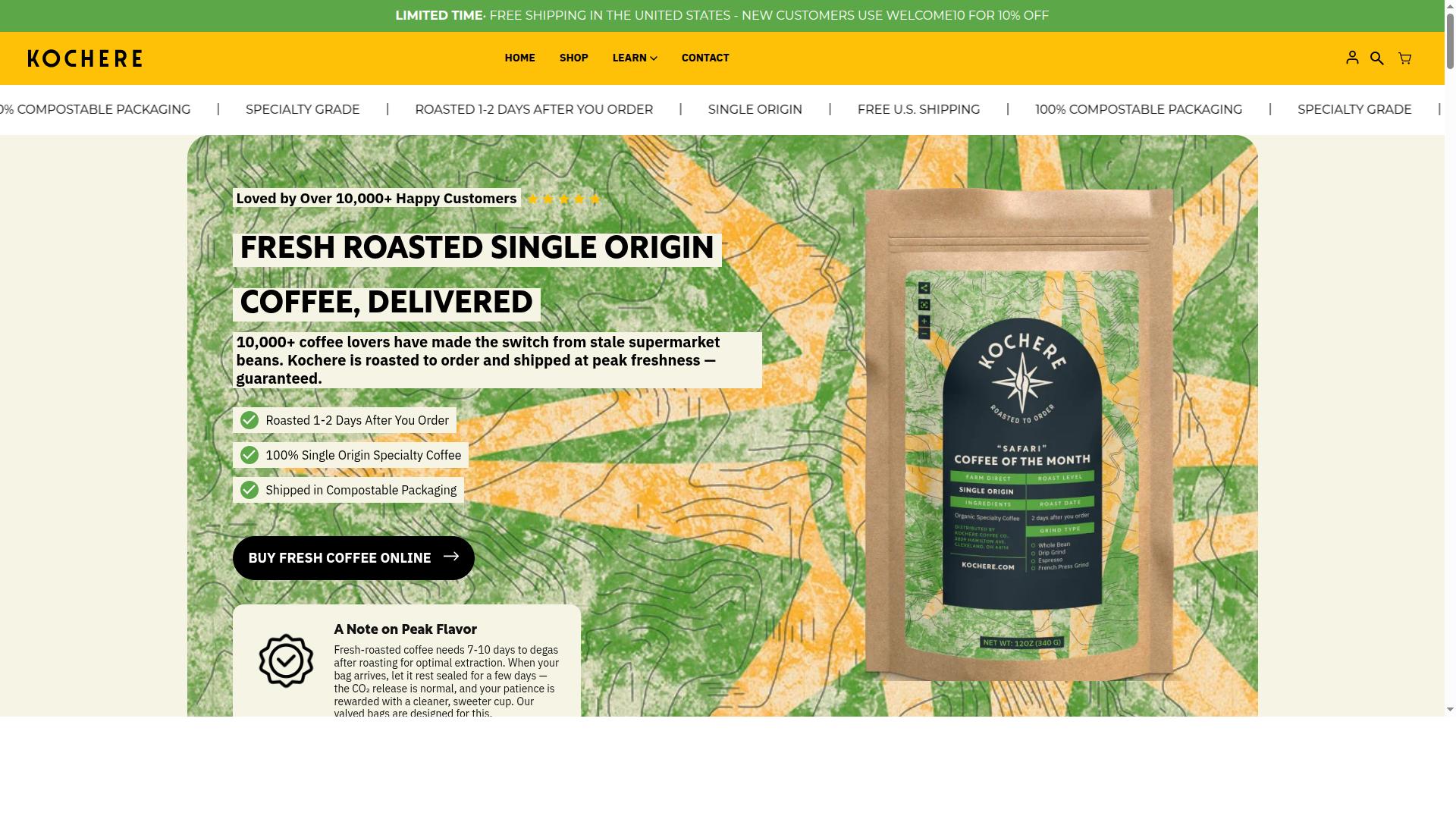
Kochere Coffee is a specialty roaster that roasts every bag only after you order it, so your beans arrive fresh, never from warehouse stock. The name is pronounced "Koh-Chuh-Ray," and it comes from the Kochere district in Ethiopia's Gedeo zone, one of the world's celebrated coffee-growing areas. That origin story sits at the heart of everything the company does.
Here is the core difference, and it matters more than any label on a bag. Nothing sits on a shelf. Your coffee is roasted in a small batch only after you order it, then shipped the same day it comes out of the roaster. Those first few days after roasting are when coffee smells and tastes its most alive, and Kochere builds its whole model around getting that window to you.
Think about what that means for your first sip. Grind a fresh-roasted bean and the aroma fills the room before the water even hits. Compare that to a bag that has been sitting for weeks, and you understand why roast-to-order freshness is the difference the team leads with.
Kochere focuses on single-origin coffee, sourced farm direct from smallholder cooperatives across eight growing regions in Africa and the Americas. That includes Ethiopia, Kenya, Tanzania, Uganda, Colombia, Brazil, Costa Rica and Honduras. Every lot is specialty-grade Arabica, scoring 80 or above on the SCA scale, and each one is cupped and scored by certified Q Graders.
For anyone exploring Ethiopian coffee, this is a natural place to start. You can taste how much origin and processing shape a cup when you compare lots side by side, rather than blending them into one house flavor. The Kochere team works directly with the farming cooperatives, with no middlemen in between.
When you order, you choose your coffee, your bag size, and your grind: whole bean, drip, coarse or fine. Everything ships in 100% compostable packaging. The company also emphasizes ethical sourcing, organic farming and sustainable methods, and only the Honduran Marcala and Ugandan Sipi Falls lots are organic.
If a bag doesn't taste right to you, the Perfect Cup Guarantee has you covered. Not happy within 30 days, and you get a replacement or a full refund, with no return shipping. It is a simple promise that puts the focus where it belongs: on what lands in your cup.
Why Ethiopian Coffee? What Makes It So Distinctive
Ethiopia is the birthplace of Coffea arabica, and its high-altitude, shade-grown coffees are prized for complex floral and fruity notes. No other origin offers quite this range in a single country.
Most Ethiopian coffee comes from smallholder farms, many working plots smaller than a soccer field. Those farms sit high in the mountains, often under a canopy of shade trees, where slow-ripening cherries build deeper flavor.
The cup can taste like jasmine one day and blueberry the next. Heirloom varieties and varied processing methods, from washed to natural, create that spread of flavors within one origin.
That diversity is why Ethiopian coffee anchors so many single-origin coffee menus. It gives you something to explore, bag after bag, without ever leaving one country.
Heirloom Cultivars and Ethiopia's Coffee Heritage
Ethiopia's heirloom cultivars are wild, native varieties that have evolved over centuries, giving each cup a sense of place you can taste. Many grow nowhere else on earth.
These aren't uniform plants bred for yield. They are traditional varieties, often growing semi-wild on small plots, and their genetic range is part of why Ethiopian coffee tastes so layered.
Walk through a village at harvest and you'll see the whole ritual: cherries drying on raised beds, neighbors sorting by hand, the scent of fermentation drifting through the yard. Coffee here is woven into daily life, served in the traditional ceremony with family and friends.
That heritage shows up in your cup. A floral aroma, a bright citrus acidity, a wine-like body: these aren't marketing words, they're the flavors that come from heirloom varieties grown in their native soil.
When the bag opens, notice the scent before you brew. It's a small window into centuries of farming tradition, passed down plot by plot, season by season.
Ethiopia's Key Coffee Regions and Their Flavor Profiles
Ethiopia's coffee regions each have distinct terroir, from the floral highlands of Yirgacheffe to the wild-fruit notes of Harrar. Altitude, soil, and processing shape what lands in your cup.
The names matter: Harrar, Sidamo, Yirgacheffe, Guji, Limu, Jimma, and Kaffa. Each one tells you something about how the coffee will taste before you even open the bag.
Ethiopia is also where Coffea arabica began, and its heirloom varieties still grow wild in forest shade. That deep root shows up in the cup as layered floral aroma, fruity notes, and brightness you rarely find elsewhere.
Harrar: Wild Fruit, Berry and Chocolate
Harrar coffees are known for their wild, fruity character, think berry, honey, and chocolate, often from natural processing. The first whiff from a fresh bag is jammy and deep, like dried fruit left in the sun.
This is eastern Ethiopia, a place with a long history of dry processing. Instead of washing the fruit off the seed, producers lay whole sun-dried cherries out to dry. The bean soaks up that sweetness, and the roast brings it forward.
Kochere Coffee's Ethiopian Harrar follows that tradition: natural process, medium roast, and heirloom cultivars from the Oromia region. In the cup you get berry and honey up front, with chocolate settling in on the finish. It is a warm, generous coffee, the kind that makes a cold morning feel easier.
Because it is roasted to order, the fruity oils stay intact rather than fading on a shelf. Grind it a little coarser for a drip brewer or keep it whole bean and let the aroma hit you when you open the bag. Either way, natural processing is what gives this cup its vivid, wine-like body.
Sidamo: Milk Chocolate, Caramel and Fruit
Sidamo offers a comforting balance of milk chocolate, caramel, and fruit, making it a crowd-pleaser for many coffee lovers. It is the kind of cup that works just as well on a slow weekend as it does at the start of a busy day.
This region sits in southern Ethiopia, where smallholder farms grow heirloom varieties at high altitude. The cup tends to feel sweet and rounded, with soft fruit notes rather than sharp brightness. Natural processing adds to that gentle sweetness.
Kochere Coffee's Ethiopian Sidamo brings this profile to your kitchen: natural process, medium-light roast, and heirloom cultivars from the Sidama Zone. Milk chocolate and caramel lead, with fruit weaving through the middle and a clean finish.
The medium-light roast keeps things lively without losing that cozy sweetness. It is a friendly introduction if you are new to Ethiopian coffee, and a reliable everyday pour if you are not. Try it as a drip grind for an easy, balanced cup, or go fine for espresso and taste the caramel deepen.
Yirgacheffe and Kochere: Floral, Citrus and Tea-Like Notes
Yirgacheffe and the Kochere district are famous for bright, floral coffees with jasmine and bergamot notes and a tea-like body. These are the cups that turn heads, delicate on the tongue yet full of perfume.
Yirgacheffe sits within the Gedeo Zone, where high-altitude cultivation and careful wet processing shape some of the most recognized specialty coffee in the world. The Kochere district nearby is known for the same lifted, citrus-driven character.
Here is the part worth knowing: Kochere Coffee takes its name from this area, but the company does not grow coffee there and does not sell a Kochere-region lot. The name is a nod of respect to a place that shaped how the team thinks about coffee. Their Ethiopian offerings currently include Ethiopian Harrar and Ethiopian Sidamo, each roasted to order.
If you love the idea of jasmine notes, bergamot, and citrus acidity, seek out Yirgacheffe and Kochere district coffees from roasters who list them. Look for washed beans, which tend to show that floral aroma most clearly, and choose a light roast to protect the delicate top notes. Sip it black first, then decide if you want milk. A tea-like body like this deserves a clean taste before anything else goes in the cup.
Natural vs. Washed Process: How Processing Shapes Flavor
The way coffee cherries are processed, natural or washed, dramatically changes the flavor in your cup, from fruity and wine-like to clean and bright. Before a single bean is roasted, the farmer's choice of method has already set the direction of the taste.
Think of processing as the step where the fruit meets the seed. It decides how much of the cherry's sweetness and perfume stays with the coffee, and how much gets rinsed away.
Natural processing means the whole cherry is laid out to dry in the sun, skin, pulp and all. The bean sits inside that fruit for days, soaking up sugars and aromatics as it dries.
The result is a cup with fruity notes, a wine-like body and a heavier, rounder mouthfeel. In Ethiopia, this is the old way, and it shows in coffees like Harrar and much of Sidamo, where you often find blueberry flavor and deep, jammy sweetness.
Washed processing takes the opposite path. The skin and pulp are removed soon after picking, and the beans are rinsed and dried clean.
Without fruit clinging to the seed, the cup turns cleaner, brighter and more acidic. This is where Yirgacheffe usually shines, with jasmine notes, bergamot and citrus acidity that feel almost tea-like. Many washed lots from the Gedeo Zone and Guji show the same sparkle.
Between harvest and drying, fermentation does quiet work. In washed coffee, beans rest in tanks so sugars and mucilage break down before rinsing. In natural coffee, the fruit itself ferments slowly as it dries.
Handled with care, fermentation builds the flavors you taste later. Handled poorly, it can turn sharp or muddy. Skilled smallholder farms and coffee cooperatives watch this stage closely, which is why the same variety can taste so different from one washing station to the next.
Here is a quick way to keep the two methods straight when you shop for Ethiopian coffee beans:
- Natural: dried as whole cherries, fruity, wine-like, heavier body, often blueberry or strawberry notes
- Washed: pulp removed before drying, clean, bright, citrus acidity, floral aroma
- Common natural regions: Harrar, Sidamo
- Common washed regions: Yirgacheffe, Guji, Limu
Neither method is better. It comes down to what you want in your first sip. Craving something bold and fruit-forward? Reach for a natural. Want lift and clarity with your morning light roast? A washed bean will deliver it.
Because Kochere roasts to order, those processing-driven flavors reach you close to their peak. The floral aroma when the bag opens, the brightness in the cup, all of it stays vivid when coffee is roasted fresh rather than sitting on a shelf.
How to Choose Your Ethiopian Beans: Roast, Grind and Brew Method
Choosing your Ethiopian beans comes down to three things: the roast level you enjoy, the grind that fits your brewer, and the brew method you love. Get those aligned and the cup in your hand tastes like the one you hoped for.
Ethiopian coffee is grown at high altitude, often by smallholder farms, and the heirloom varieties bring a wide range of flavors to the cup. The roast and grind you pick decide which of those flavors reach your tongue first.
Start with the aroma. Open the bag and notice what hits you: jasmine, bergamot, blueberry, or something deeper and chocolatey. That first smell is a good clue to how the coffee will taste.
Light roasts keep the floral aroma and citrus acidity that make Yirgacheffe and Guji coffees so distinct. You will taste jasmine notes, bergamot, and a tea-like body. A light roast lets the origin speak clearly.
Medium roasts bring out chocolate undertones and a rounder sweetness. If you like a little more warmth and less brightness, this is your lane. The fruity notes are still there, just softer.
Darker roasts tend to cover up the delicate floral and fruit character that makes Ethiopian coffee special. If you usually drink dark roasts, try a medium first as a bridge.
Match your grind to your brewer. A fine grind works for espresso, where the water pushes through quickly and needs more surface area. A medium grind suits pour over, letting water pass at a steady pace.
A coarse grind is right for French press, where the coffee steeps in water for several minutes. Too fine a grind there turns the cup muddy and bitter.
- Espresso: fine grind, short extraction, intense flavor
- Pour over: medium grind, clean and bright cup
- French press: coarse grind, fuller body and texture
- Cold brew: coarse grind, long steep, smooth finish
Kochere roasts to order, so your beans arrive close to their roast date and ship whole bean or ground to your preference. Freshly roasted beans hold more of that jasmine and citrus aroma than bags that have sat on a shelf.
Whole bean keeps the aromatics locked in longer. If you have a grinder at home, order whole bean and grind just before brewing. If not, ground to your brew method is a simple, reliable choice.
Experiment freely. Try the same Ethiopian Sidamo as a pour over one morning and a French press the next. You will learn fast which flavors you love and which roast level suits your taste. That is the fun part of single-origin coffee.
Kochere Coffee's Ethiopian Offerings and Pricing
Kochere Coffee currently offers two Ethiopian single-origin coffees: Ethiopian Harrar and Ethiopian Sidamo, both roasted to order. That means your beans hit the roaster after you place your order, not weeks before. Open the bag and the aroma tells you so.
Both are natural process coffees, dried with the fruit still on the bean, and both are roasted to a medium roast. That combination keeps the fruit forward and the body round, which is exactly what draws so many drinkers to Ethiopian coffee.
Ethiopian Harrar
Ethiopian Harrar comes from the Oromia region and is grown from heirloom cultivars, the older, native varieties that give Ethiopian coffee much of its character. In the cup you get berry, honey and chocolate, with a wild fruit edge that lingers pleasantly.
The natural process lets those fruity notes lead. If you like a coffee with depth and a little untamed character, this is your starting point. It drinks beautifully as a pour-over and holds its own in a press.
Ethiopian Sidamo
Ethiopian Sidamo is the softer, sweeter side of the pair. Expect milk chocolate and caramel up front, with gentle fruit notes underneath. It is an easy, welcoming cup, the kind you reach for on a slow morning.
Because it stays smooth and balanced, Sidamo works well for anyone easing into Ethiopian coffee for the first time. The natural process still brings a touch of fruit, just dialed back and rounded off.
Prices and Sizes
Both coffees come in the same size options, so you can pick by how fast you drink. Here is the full price range:
| Size | Price |
|---|---|
| 12 oz bag | $26.99 to $27.99 (most single origins $27.49) |
| 1 lb bag | $33.99 to $35.99 |
| 2 lb bag | $59.99 to $62.99 |
| 5 lb bag | $99.99 |
Ethiopian Harrar and Ethiopian Sidamo are each listed at $27.49 for a 12 oz bag. The 5 lb option is the value pick if you have found your daily cup and want to keep it stocked.
Sampler, Shipping and Guarantee
Not sure which Ethiopian coffee suits you? The Single Origin Coffee Sampler is available at $29.99 and lets you taste across the lineup before committing to a full bag.
Free shipping applies within the United States. Alaska, Hawaii and international orders pay shipping.
The Perfect Cup Guarantee backs every order. If you are not completely satisfied, contact the Kochere team within 30 days for a replacement or a full refund. No return shipping, no questions asked.
For $27.49 a 12 oz bag, you get freshly roasted Ethiopian coffee beans at your door. Roasted to order, priced plainly, and covered by a guarantee that takes the risk off your first sip.
Trust Signals: Q Grading, Freshness and Customer Reviews
Every lot at Kochere Coffee is cupped and scored by certified Q Graders, ensuring it meets specialty-grade standards before it reaches you. That single sentence tells you a lot about how this roaster thinks.
Q Grading is the coffee world's most respected quality check. Licensed Q Graders taste each sample using the SCA scoring protocol, the same method used across the industry to judge aroma, flavor, acidity, body, balance and aftertaste. A coffee needs 80 points or more to earn the specialty label.
At Kochere, every lot clears that bar. The team describes its coffees as scoring 80+, which places them in the top 3% of the world's coffee. For you, that means the floral jasmine notes of a Yirgacheffe or the blueberry depth of a natural-process Sidamo are not luck. They were measured before the bag was ever sealed.
The score behind your cup
What does an 80+ score actually feel like when you brew? It shows up as clarity. The citrus acidity of a washed Ethiopian coffee tastes bright rather than sharp. The tea-like body feels clean instead of thin. When a lot is cupped and scored, defects like harshness or flatness get caught early.
That matters most with delicate coffees. Ethiopian heirloom varieties from high-altitude cultivation in the Gedeo Zone or the Guji highlands are subtle by nature. A careful roast and a verified score help those floral aromas and fruity notes survive all the way to your kitchen.
You do not need to memorize scoring sheets to benefit. The grade is the quiet promise in the background, the reason your first sip tastes the way the tasting notes said it would.
Roasted to order, shipped the same day
Freshness is the other half of the trust story, and it is where Kochere puts its focus. Coffee is roasted to order, not pulled from a warehouse shelf, and orders ship the same day they are roasted. That short window between the roaster and the mailer is what keeps a light roast lively.
You can taste the difference the moment the bag opens. Freshly roasted Ethiopian coffee releases a wave of jasmine and bergamot before you even grind it. Older beans smell muted, and their brightness fades first.
This is why roast-to-order matters so much for single-origin coffee. A washed Yirgacheffe or a sun-dried Harrar has layers that only show up in the first weeks after roasting. Kochere's same-day shipping protects those layers for your cup.
What customers say
More than 10,000 customers have ordered from Kochere Coffee, and the feedback tends to circle back to balance. One verified customer put it this way:
"A wonderful complex flavor with some light hints of acidity and fruit, but is very balanced... an excellent Ethiopian coffee."
That word, balanced, is the thread running through the reviews. Bright citrus acidity and fruity notes are welcome, as long as nothing shouts over anything else. A complex cup should still feel easy to drink.
If a bag ever misses for you, the Perfect Cup Guarantee covers it. Not happy within 30 days, and you get a replacement or a full refund, with no return shipping. That is a simple, confident promise from a roaster that scores every lot and roasts it after you order.
Final Verdict: Is Kochere Coffee Worth It for Ethiopian Beans?
If you value freshness and want to explore Ethiopia's diverse flavors, Kochere Coffee's roast-to-order model delivers a compelling experience. The core idea is simple: your coffee beans are roasted after you order, not weeks before. That matters with Ethiopian coffee, where the floral aroma and citrus acidity fade fastest in the days after roasting.
Open a bag soon after it arrives and you notice the difference. Jasmine notes lift out of the Ethiopian Sidamo, and the blueberry flavor in the Harrar reads bright and clear. Those are the qualities that make single-origin coffee from Ethiopia worth seeking out in the first place.
Kochere also leans on Q-graded specialty coffee, a quality standard that separates careful lots from everyday commodity beans. Combined with roast-to-order timing, it gives you a fair shot at tasting what the Gedeo Zone and the eastern highlands actually offer.
Two Ethiopian offerings cover very different flavor ground. The Ethiopian Harrar brings fruity notes and a wine-like body from natural processing, while the Ethiopian Sidamo shows a brighter, tea-like body with floral and citrus character. Choosing between them is really a choice about what you want in your cup.
Pricing is transparent, so you know what you are paying for before checkout. There is no guesswork about what is in the bag or where it came from. For anyone building a first shelf of Ethiopian coffee, that clarity is worth a lot.
Is it worth it? For drinkers who prioritize freshness and single-origin traceability, yes. If you want to taste heirloom varieties at their liveliest and follow a clear line from farm to roast, this model fits. If you prefer to buy a large bag and let it sit for months, the freshness advantage simply has less to offer you.
One more thing softens the risk. The Perfect Cup Guarantee means that if you are not happy within 30 days, you get a replacement or a full refund, with no return shipping. Trying a new origin becomes a low-stakes experiment.
To explore the current lots, visit kochere.com. You can also email support@kochere.com with questions about a bean or an order. Follow @kocherecoffee on Instagram, TikTok, X, Facebook and Pinterest for brewing ideas and roast updates.
Contact Kochere Coffee
- Website: kochere.com
- Email: support@kochere.com
- Social: @kocherecoffee on Instagram, TikTok, X, Facebook and Pinterest
Frequently Asked Questions
What makes Ethiopian coffee so distinct from other origins?
Ethiopia is the birthplace of coffee and home to thousands of heirloom cultivars, which is why its coffees tend to show vivid fruit, floral and berry notes rather than the heavier, nuttier profile of many other origins. Natural-processed lots like Kochere Coffee's Ethiopian Harrar and Ethiopian Sidamo lean into berry, honey, chocolate and wild fruit sweetness. If you want to taste the difference for yourself, a single origin is the clearest way to explore it.
Which Ethiopian regions and flavors should I look for?
Ethiopia's best-known growing regions include Harrar, Sidamo, Yirgacheffe and Guji, each with its own character - Harrar is often wild-fruited and winey, while Sidamo and Yirgacheffe tend toward brighter citrus and floral notes. Kochere Coffee currently offers an Ethiopian Harrar (natural process, medium roast, with berry, honey, chocolate and wild fruit) and an Ethiopian Sidamo. Both are heirloom cultivars from Oromia, so you can compare two expressions of the same origin side by side.
Should I choose a natural or washed Ethiopian coffee?
Natural-processed coffees are dried with the fruit still on the bean, which typically gives sweeter, berry-forward, heavier-bodied cups; washed coffees are usually cleaner and more acidic, with pronounced floral and citrus notes. If you like fruit-driven sweetness, start with a natural lot like Kochere Coffee's Ethiopian Harrar or Sidamo. If you prefer a brighter, tea-like cup, look for a washed Ethiopian when it's in the lineup.
How fresh is Kochere Coffee, and how should I store my beans?
Kochere Coffee is roasted to order - every bag is roasted in a small batch only after you order it and ships the same day it's roasted, so nothing sits in warehouse stock. Once your bag arrives, keep it in an airtight container away from light, heat and moisture, and buy in a size you'll finish within a few weeks. Whole beans stay fresh longer than pre-ground, so grind just before brewing if you can.
Which Kochere Coffee bag size or option is right for me?
If you're trying Ethiopian coffee for the first time, the Single Origin Sampler ($29.99) is an easy way to compare lots before committing to a full bag. Regular drinkers can choose 12 oz, 1 lb, 2 lb or 5 lb bags, and the Coffee of the Month subscription saves up to 15% depending on delivery frequency, with the option to skip or cancel anytime. Shipping is free across the continental United States.
What if I don't like the coffee I ordered?
Kochere Coffee's Perfect Cup Guarantee covers you: if you're not happy within 30 days, you'll get a replacement or a full refund, with no return shipping required. Reach out to support@kochere.com and the Kochere team will sort it out. It's a low-risk way to explore a new origin or roast.